Knowing When to Stop: The OSINT Skill No One Teaches
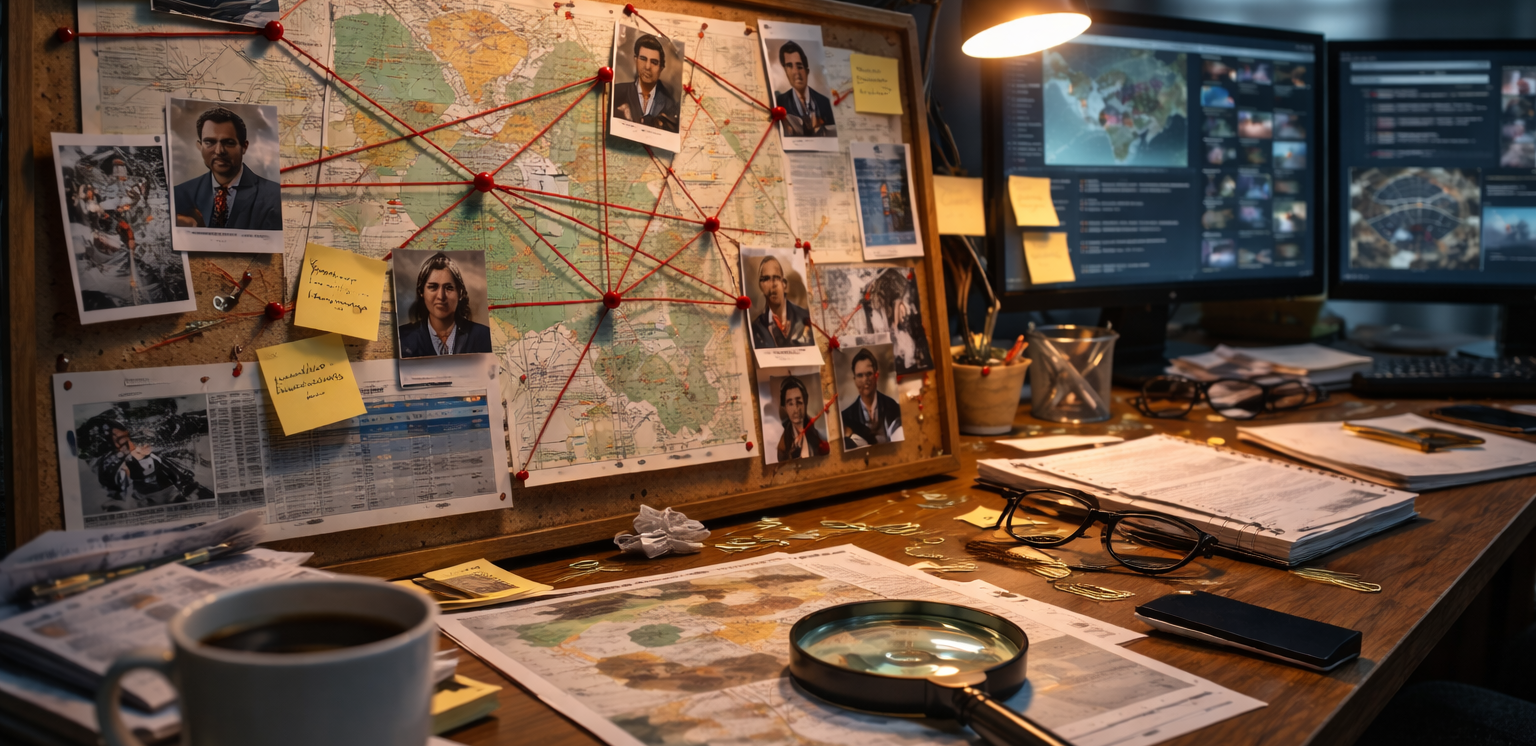
OSINT analysts are very good at starting investigations. We love the intrigue of a new case, the excitement of pivoting, expanding, and pulling on threads. Deep diving into data is what draws most of us in. What we are much worse at is knowing when to stop. Does this sound like you?
It isn’t because we lack skill or discipline, but because the art of OSINT quietly rewards our continuous digging. There is always another source, another platform, another angle that might blow the case wide open. And as long as we’re collecting information, it feels like we’re building an unstoppable case.
The issue is that endlessly collecting data is very often a substitute for good decision making.
Stopping Feels Like Failure
Typically, I believe most analysts aren’t afraid of missing information, they are afraid of missing the information. The golden nugget of information that will make the entire office clap and all the baddies go to jail. Instead of asking ourselves
“Do I have enough information to answer the stakeholder question?” we ask “But what if there’s something else…?”
And this question will keep investigations going long after they have stopped producing insights. Work continues but nothing goes deeper.
The culture of OSINT reinforces this type of thinking and behavior because we praise being thorough, making clever pivots and diving down deep rabbit holes. Rarely do we talk about situations where someone says
“This extra data won’t change the assessment in a meaningful way.”
Part of that is just because it isn’t as sexy to talk about, but I also think it is a concept that is a bit hard to explain to students. However, the lack of data can still be an assessment.
Don’t Judge Me
Collection lives in a safe space because it’s a set of steps we can carry out systematically. We can always justify one more step to be thorough… to confirm… just in case. We love to hang out in the collection phase of the OSINT cycle not because it is necessary but rather it delays the uncomfortable part of the work: The Judgement.
Forming a judgment is different; it requires accepting a level of uncertainty. We may never know the who, why, how in the situation but we must still defend our assumptions and make a call without the comforting snuggle of a completely solved investigation.
More Data Does Not Equal Better Analysis
There comes a time in each investigation where extra data begins to dilute the findings. This typically happens when we mass collect data at scale and patterns blur, leads get buried, and we lose confidence in our arguments.
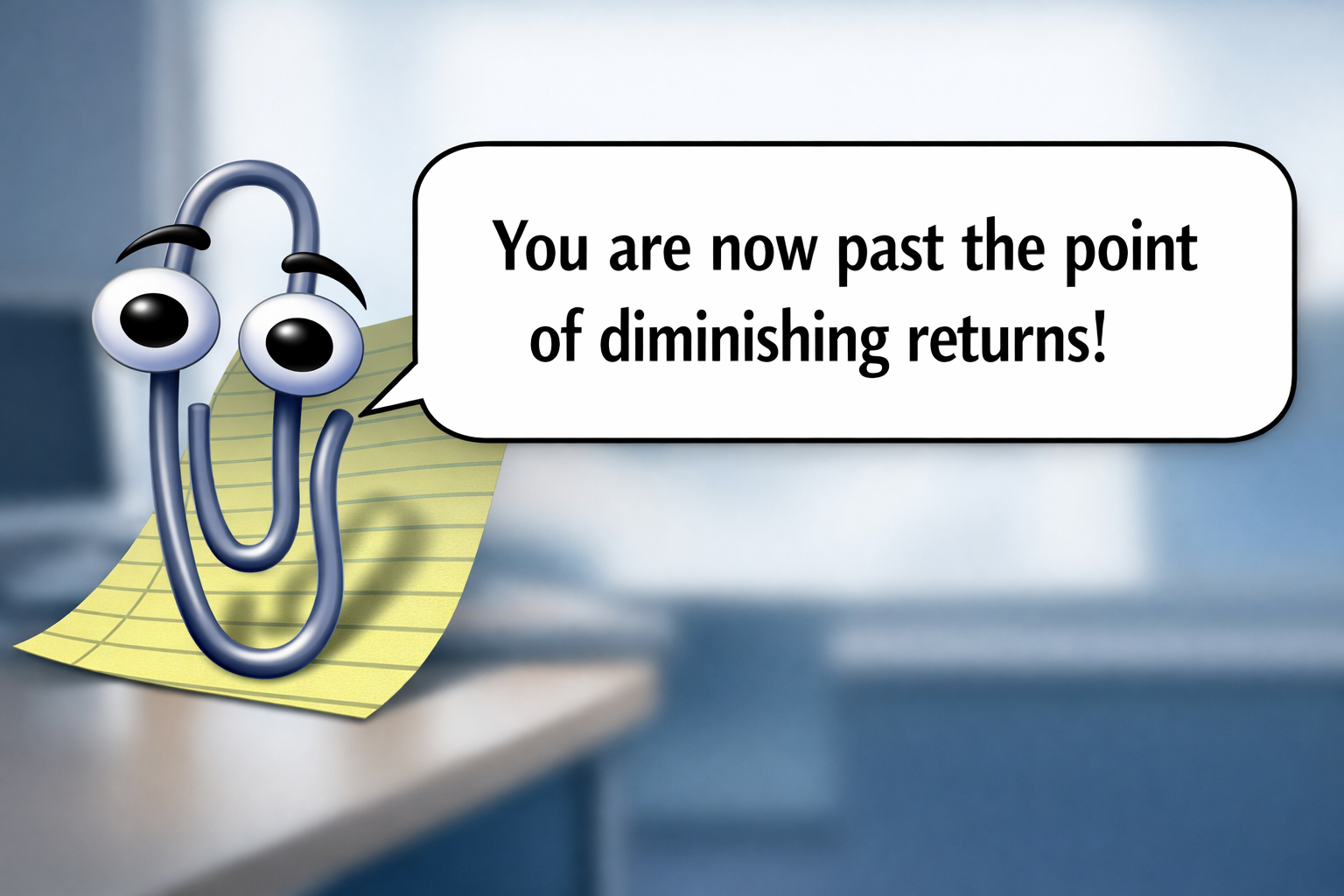
No one really teaches analysts how to spot this turning point. Clippy doesn’t jump out and remind us that “you are now past the point of diminishing returns!” So analysts tend to just keep pushing forward with what they know, collection.
Ironically, the more data we collect past this point, the harder it is for us to explain why something matters. We effectively bury the lede under all the other garbage that never needed to be collected to provide an actionable assessment.
The Skill of Giving it a Rest
I don’t believe that knowing when to quit is an instinct in this field. It’s a learned skill that requires us as analysts to ask uncomfortable but necessary questions like:
Does this data support the initial question?
What decisions will this analysis actually support?
What new information would actually change my assessment at this point?
If I stopped now could I clearly explain why?
These questions are analytical rather than technical and are rarely taught in OSINT training because they are hard to teach and difficult to measure.
Don’t Not Be Stopping
If teams never discuss or train on when to stop, when enough data is enough, they will tend to experience the same problems over and over:
Paralyzed by the analysis phase
Huge amounts of data yet weak conclusions
Weak leadership briefs
Constant reworking and second guessing
Over time, analysts will burn out and confidence from leadership will erode because nothing feels finished

What Does Mature OSINT Look Like?
At mature levels of OSINT skill, it stops being about how much you can collect and becomes more about how well you can make decisions. Mature analysts collect intentionally, and they can articulate why more data doesn’t equal more confidence. They understand that stopping isn’t where the work ends, and that uncertainty is an acceptable outcome. This is just the transition from the exploration phase to the explanation phase.
However, this isn’t a problem for beginners. If you are still learning how to collect, pivot, and find sources, it may feel overwhelming and premature to try to gauge when to stop. But if you are a strong collector, skilled in gathering data, and you find yourself getting stuck on deciding what matters, this might be the skill you are missing.
How To Learn When to Stop
Developing the skill of when to stop comes down to three things:
1. Defining What Enough is Before You Start
This should be taken care of in the first phase of the OSINT cycle. Define what enough looks like for your team, for this project, for this case. As questions up front about required levels of confidence, what decisions this analysis may support, and what type of information would change the overall assessment. Without defining “enough” up front, collection will expand endlessly.
2. Practicing the Decision to Stop
Practice working within constraints and discomfort. This looks like limited time, incomplete information, and pressure from leadership. Stopping your collection under these might feel uncomfortable, but analysts must move forward regardless. Practice makes perfect.
3. Learning to Defend Your Decision
Defending your decision to stop may actually be harder than the act of stopping. Rarely do we have to practice explaining why more data won’t equal better results, why uncertainty still remains after an investigation, and why that uncertainty is ok. Without practicing this skill, analysts may keep collecting just to avoid the uncomfortable conversations.
Where to Practice
These skills are difficult to learn alone. They require structured pressure, challenge, and feedback. That’s why I focus on this skill consistently in my in-person OSINT training, to help analysts learn to make and defend strategic decisions in real time.
Reach out today to see how this is taught in my OSINT training